

The Fall 2018 edition of Communities, focused on “Networking Communities,” is now available by donation for digital download.
Cohousing communities are scattered across this continent now, some in unique, solo locations, others in geographic clusters in and around urban areas, and new ones always in development. In each community the members dive into a new paradigm of relationships and shared responsibilities and begin to figure out how to live together. In Portland, Oregon, some folks from different communities got together and began to collaborate almost 10 years ago. We saw the big questions:
How to live together? How to help one another?
Cohousers have lots of support from our shared resources—the well-known books, the cohousing “elders,” the national listserv and website, and the regional and national conferences. All of these provide invaluable information, patterns to follow, and voices of experience. And yet every community has to live into their own new story. Every community runs into unique challenges, and every community runs the gamut of the perennial and familiar rough spots.
How to live together. How to help one another.
The number of cohousing communities in our area went from two (founded nearly two decades ago), to four, to six, to more now, plus forming groups. Others are established in Bend, Ashland, Corvallis, and Eugene. In the midst of this growth and expansion, something new began, which started among a few of us at an annual End-of-Summer party at Trillium Hollow. We asked one another, “Why don’t we start connecting across our communities more consistently?” A few months later, a few inveterate networkers stepped up to create this regional group for mutual support and connection. We called it the PDX-Plus Cohousing Group, and we have kept it together, meeting quarterly for almost 10 years now.
Many stories, shared experiences, help, and advice have flowed between the meeting participants, who then take what they learn back to their own communities. We rotate the hosts for our meetings, arrive early for tours and shared potlucks, marvel at the different physical layouts and land, and share everything from plant cuttings to an overabundance of fruit to advice on best dining tables. We also connect online with an open Google Group which now has about 150 members.
We start our meetings in a circle, with an introduction and report from each community. We try to pick a main topic for each meeting, although sometimes our reports on current issues shift the agenda. Some consistent representatives come to most meetings, and there are always a few new faces, with anywhere from 10 to 25 at each meeting.
All kinds of topics arise in our discussions: What really serves as community glue and what does not? How do we do multigenerational living effectively, in real time? What does it mean to be more than neighbors, not quite family? Where is the balance between shared and private lives? How are our meal programs structured, and how are they working or changing? How is decision-making unfolding—consensus details, blocks, time-sensitive issues, prioritization, hurdles, team vs. whole-community decisions? How do renters work out, do they participate equally, do they come to meetings? How do we negotiate issues of power? Sometimes we share recommendations—do you know a good cohousing-friendly lawyer, who is the best realtor, who has Reserve Study advice? And of course, always, getting the work done—how many hours of workshare, issues of aging and changing capabilities, tracking or not tracking, outsourcing work, people fading out, burning out, moving out…how do we manage all that?
I read through past minutes to prime myself for this writing, which reminded me that we have circled around these same topics again and again. The current details change, the themes remain the same. I asked myself, has it helped us to connect? In a number of instances, I am certain it has:
● Treasurers from our different coho’s got together and talked shop.
● Facilitators helped with several difficult meetings in sister communities.
● We have experienced death and dying and shared our learnings about aging and end-of-life, including resources like the new Villages movement.
● We discussed and compared our Emergency Preparedness priorities, projects, information, and resources.
● We coordinated open house days, bus tours, shared workshops, and special events.
● We set up a PDX+ Facebook page as well as the Google Group.
● We have now started a first working group in preparation for the 2019 National Cohousing Conference, which is happening in Portland.
● Best of all, we have met face to face, heard stories, found out that most of our challenges are shared, and gathered inspiration to move forward in some new ways.
Then I must ask: What hasn’t worked? Where have we fallen short? This was the topic of our most recent meeting.
● We are all so busy. The demands of cohousing plus our complex personal lives can be all-consuming. It’s hard to stay connected to others who are equally busy elsewhere. It’s easy to forget to try. The Google Group helps a little but not always enough.
● We don’t keep all our commitments, recently noticeable around Emergency Prep. Good, balanced emergency prep has been hard to accomplish within each community, not to mention cooperative planning between communities. Big ideas abound, follow-through can fall short.
● It’s hard to keep the mutual support alive among the sub-groups and specialists in each community, regarding such topics as facilitation, treasury and budgets, and online communication.
● Why do we find ourselves “reinventing the wheel?” Sometimes we forget that work has already been done and that we could tap into and learn from others’ experiences.
Where is the PDX-Plus Coho Group going from here?
● We recently became more organized by choosing and announcing each community’s representatives.
● We are reaching out to forming communities who are not yet in touch with us.
● We are beginning to plan for next year’s National Cohousing Conference, which will happen here in May 2019. This big project will undoubtedly be both demanding and rewarding.
As I read back through minutes from nine years of meetings, I found some succinct quotes which show the elevated inspiration which sometimes comes through when we talk face to face.
● “We have signed up for multiple collisions between the dream and the reality.”
● “We must hone a lifelong practice of holding everyone else’s opinion as important as our own.”
● “Enter each conversation with a degree of respect you would give to your lifelong partner.”
Yes, it can be simultaneously reassuring, daunting, and energizing to learn that our challenges and our joys in living intentionally in community are shared. For all these reasons, this networking regional group will continue to be a worthwhile endeavor and a model of cooperation, as we live into the big questions: How to live together, and how to help one another.
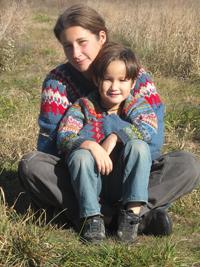
Jude Foster has lived in Trillium Hollow Cohousing, in Portland Oregon, for 11 years. Earlier in her life, she spent most of her 20s and 30s living in two different, more intensive spiritual communes, one small, one large. She is a long-time Montessori guide, a Buddhist, and a gardener. In Trillium her major involvement is with the Legal/Financial and Landscape Teams. She says this garden photo is worth a thousand words.
● ● ●
Upcoming Cohousing Conferences
Regional Cohousing Conference
September 21-23, 2018
Amherst, Massachusetts
National Cohousing Conference
May 30-June 2, 2019
Portland, Oregon
Excerpted from the Fall 2018 edition of Communities, “Networking Communities”—full issue available for download (by voluntary donation) here.
Keep the conversation going with these pieces
There are no available blogs
Subscribe to our newsletter for fresh stories and community updates delivered to your inbox.
Get unlimited access to courses, exclusive member events, and a supportive network of community builders
Access all courses, books, and premium content
Member-only workshops and community builders
Member-only workshops and gatherings
{{ item.label }}
{{ item.value ? item.value : currencyFormat( item.amount ) }}
Subtotal
{{ currencyFormat( pricing_summary.total_amount ) }}
There are no results matching your search