
This is an introductory excerpt from the article published by Teen Vogue. Photo by Holly Lynton. Article written by Brittney McNamara.
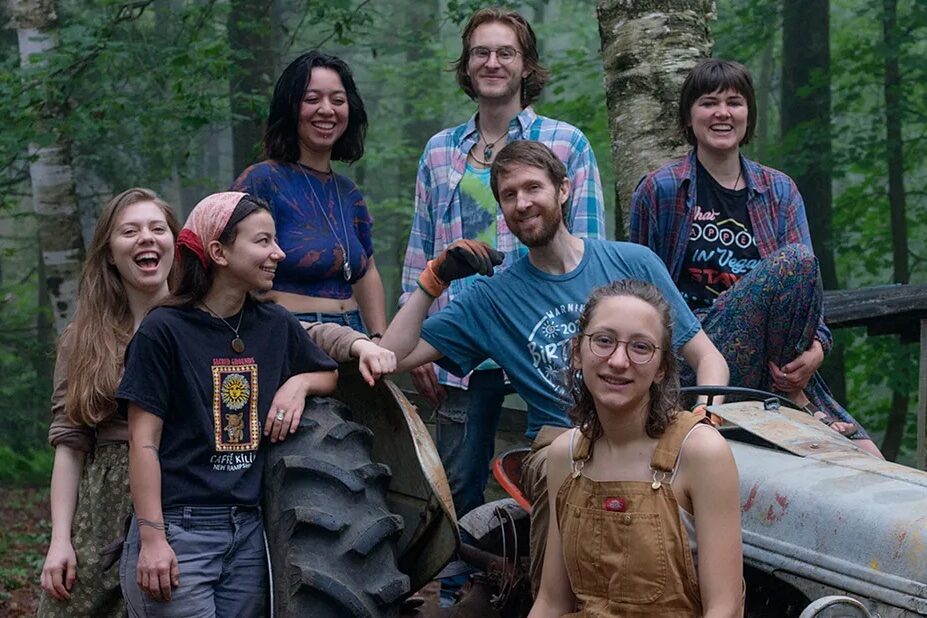
On one of the first nice days of spring in New England, Madison Healey, Jo Fuchs, and Gabriel Futterman sit around a wooden table in Kailasha house, the space they share with four others, picking at a bountiful lunch and deep in conversation about what it means to live in a place like this.
“The reason I’m here is not because it’s a comfortable, beautiful, lovely place to live — which it is — but because it is, for me, an act of prefiguration. That means [to] live now what you want to see in the future, build what you’re working for post-revolution into the act of revolution and into all of your actions,” he says. “When that system crumbles and falls apart, [it’s about making sure] there is an alternative for people to go to.”
Futterman sees intentional communities as sites of “utopian experimentation,” which Kanney affirms. Kanney refers to intentional communities as “living laboratories.”
“Intentional community is, by definition, living with a group of people on shared land or housing and doing so intentionally, so that you’re writing agreements, have a governance system, and structuring it,” she says. Still, intentional communities can take a vast array of forms.
You might be most familiar with this concept through the hippie communes of the 1960s and 70s, but that’s not the only model for these groups, nor the first. According to Community Finders, the first intentional community in recorded history was Homakoeion, a vegetarian group that formed in 525 BCE. Now, intentional communities may be nestled in the woods like Sirius, or may form in bustling city centers. Intentional communities might require residents to share their income, or have residents make their own money. Some may function largely off-grid while others very much rely on city services…
Keep the conversation going with these pieces
There are no available blogs
Subscribe to our newsletter for fresh stories and community updates delivered to your inbox.
Get unlimited access to courses, exclusive member events, and a supportive network of community builders
Access all courses, books, and premium content
Member-only workshops and community builders
Member-only workshops and gatherings
We use cookies to improve your experience on our site. By using our site, you consent to cookies.
Manage your cookie preferences below:
Essential cookies enable basic functions and are necessary for the proper function of the website.
These cookies are needed for adding comments on this website.
A residential project: people live here as their primary home.
An institution, business, network, or project that isn’t a residence (e.g. a learning center, farm, or network with no one living there full-time).

{{ item.label }}
{{ item.value ? item.value : currencyFormat( item.amount ) }}
Subtotal
{{ currencyFormat( pricing_summary.total_amount ) }}
There are no results matching your search