
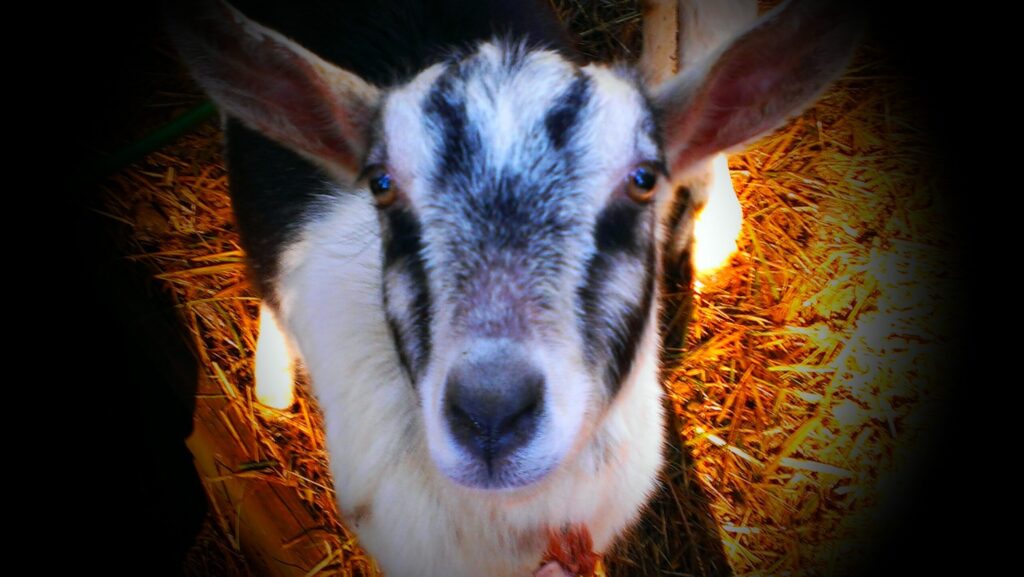
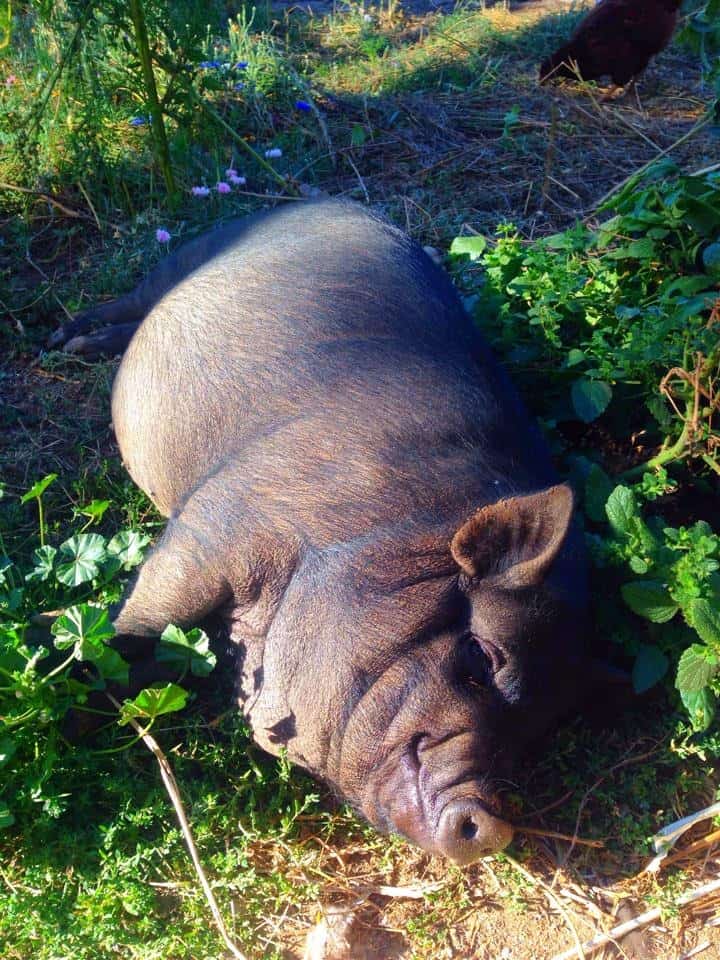
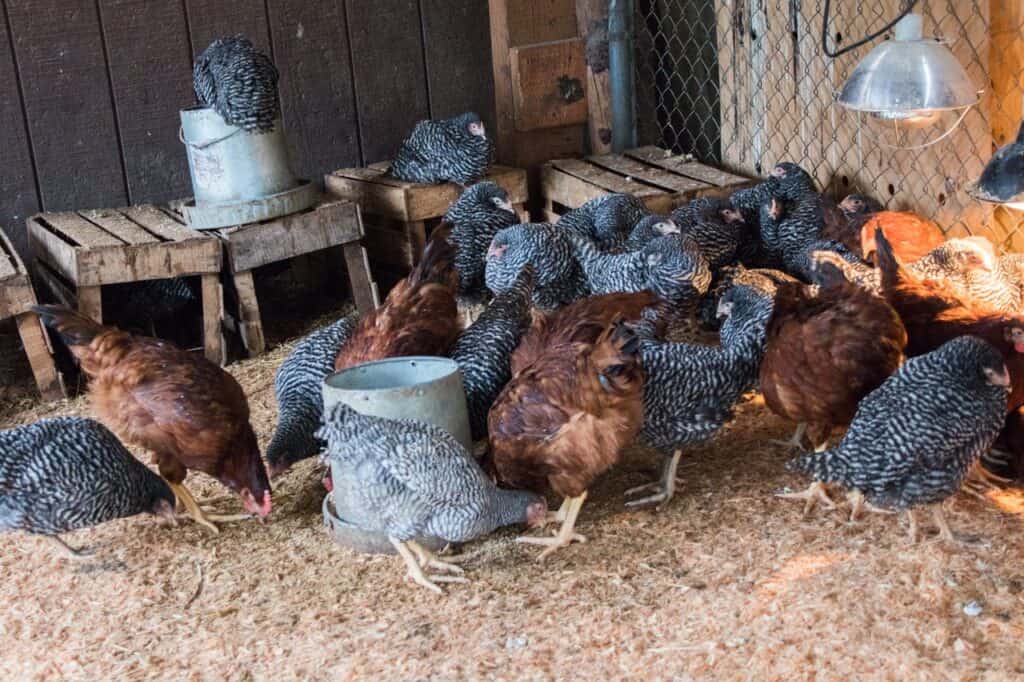
Heart 2 Heart is two parts healing sanctuary, one part farm. Nestled in the mountains just 40 minutes from Portland and 4 miles from Sherwood and Newberg we steward a magical space where humans of all sorts can live in service of others while in pursuit of the best versions of themselves. This is an environment committed to the acceptance of all humans, nonviolent communication, hard work, and unconditional love. A desire to connect deeply with others in a gentle, sensitive, and compassionate way is critical here, as is the desire to spend large amounts of time and energy in service-oriented manual labor. Our community consists of our nuclear family of 4 (including elder father), chosen family of +3 neurodivergent young adults, and both long-term residents and interns (generally ranging from 2-6).
At this point in our journey, we are prioritizing inquiries from humans who are seeking community living and homesteading in the Pacific Northwest as a long-term way of life. We are accepting all applications, however, so the more we understand about your experience, intention, and long-term goals the easier alignment is to flesh out. We have a tried and true 5-step process for resident applicants (shaped, tested, and streamlined as we’ve enjoyed shaping communities and building organizations over the last 25+ years). Please begin by thoroughly reviewing this listing, becoming familiar with our vision, roles, and governance, and taking the time to feel into our community living agreements, then send us an email inquiry (bonus points if you reference how these agreements feel to you in your initial email). Once we receive your thoughts, we’ll send a very thorough email on logistics, as well as the application process.
Our housing options vary from Tipi, Yurt, Tiny Home, and community bunkhouse to private room in our home, and we have a few building sites for folks to custom-build should we discover significant alignment and interest in long-term cocreation (note: we do not begin the “permanent” talk/planning before we have shared all four seasons together). None of what we have here is fancy, or new, most of it is put together with salvage materials, but it’s largely dry, warm, and functional. We also have a large 20’x40′ healing center for yoga, massage, reiki, and ceremony work, should you have a personal practice or desire to do healing work with others.
This environment provides opportunities and resources to glean a wealth of knowledge and expertise and apply it immediately, and all will be exquisitely challenged to balance the often romanticized idea of self-sufficiency with the general sustainability needs of the community (which vary significantly by the season). Make no mistake, this is an environment of growth. As a community, we are solution oriented. When we feel lost, we go to the well, studying and implementing the practices of Living “Nonviolent Communication” by Marshall Rosenberg, “Unconditional Bliss” by Howard Cushnir, “The Four Agreements” and ”The Mastery of Self” by Don Miguel Ruiz, and so many others.
The ability to live on 10 gorgeous mountainside acres with room to be free, while maintaining easy access to the city, the ability to farm and raise and grow all one’s own food, as well as the freedom to enjoy the well-established and maintained infrastructure we have here from garden beds, pastures, greenhouses, sheds, barns, and equipment, to yoga studio, weight room, ceremonial spaces, sweat lodge, and access to both expansive recreational opportunities and experienced like-minded community, all while enjoying a high degree of autonomy is both an incredible privilege and luxury, but it also comes with substantial responsibility.
We have found most residents assess and contribute an estimated value of $2,500 to $4,000 per month in labor or energy exchange depending on their footprint and which lodging options they inhabit (a reference we use so humans considering coming here have an understanding of the level and volume of commitment we contribute to each other). How this manifests varies from human to human and depends largely on skill level and what areas are in abundance for each individual. Humans with highly refined skillsets are encouraged to speak to what they are willing and would like to contribute to the community, and everyone is welcome to give energy in the form of “general labor” (generally in the range of 20-30 hours per week). We try to keep the work schedule fluid and discuss/negotiate expectations on a regular basis, but have found those who simply want cheap housing are often not a good fit. We have been teaching and speaking in the arenas of permaculture, vermiculture, herbology, mycology, animal husbandry, water conservation, sustainable/community living, nonprofit formation, business development, and the legal/regulatory side of agriculture for well over 15 years, and are seeking humans who have passion for the WORK involved in healing the planet, nourishing each other, and being self-sufficient.
We commit to living in deep connection and consideration with our fellow humans. What this means to us is we choose to share authentically and vulnerably with each other in as many of the 14 areas of intimacy as we feel able, prioritizing emotional, intellectual, recreational, and physical (nonsexual) connection with the goal of seeing each other completely and increasing our overall interconnectedness. We prioritize care for the water, the soil, the air, and all who share this space with the knowledge that it’s our responsibility to our ancestors and future generations. How we communicate is of immaculate importance, and we lean on nonviolent communication as our preferred methodology. We use the four agreements of the Toltek as our foundations: Be Impeccable with Your Word, Don’t Take Anything Personally, Don’t Make Assumptions, and Always Do Your Best, and use the following Community Living Agreements to guide our daily practice.
Community Living Agreements
Cooperation: Working together is one of the most important elements of community. While we each need time alone, sharing duties like cooking, cleaning, harvesting, preserving, and building/beautifying bonds us and gives each individual opportunity for self-expression and ownership.
In Practice: I am committed to involving myself with the projects going on around me whenever possible. I participate in shared duties, and I contribute to the sustainability of the community on a daily basis. I will observe my environment and take initiative to involve others and improve quality of life overall.
Independence/Self-Reliance: Managing personal responsibilities, space, and time are critical to the success of the group. We commit to caring for tools and equipment to ensure they last (always putting them away), leaving spaces better than we find them, and managing our time, hygiene, and energy levels in ways that add to the beauty of the space and community.
In practice: I realize the importance of keeping my body and space clean, managing my time, and cleaning up all spaces I use/we share together, and I am committed to radical self-sufficiency/self-reliance. I set aside time daily for this practice.
Balance & Self-Care: It is impossible to pour into others when we are not good to ourselves. This community is faster-paced than most, largely due to our desire to be of service to those in need, which means this place is not a fit for everyone. Balancing our personal health and needs, both physical and emotional, and communicating those needs to the group is critical to a thriving community.
In practice: I welcome a fast-pace life of service, and recognize awareness of and communication around my personal needs is critical to my long-term success in any relationship and community. I commit to daily reflection, evaluation, and communication of my needs.
Vulnerable Communication: We recognize direct, clear, calm communication of feelings as the cornerstone to healthy interaction. We embrace the practice of NVC both as a group and as individuals, and understand the destructive power of triangulation, labels, judgement, and negativity. We choose to speak “I statements” with emphasis on feelings.
In practice: I commit to communicating my feelings directly with people, speaking to my emotions and needs, and applying the principles of NVC (as well as re-reading/studying this method of communication as often as needed with the goal of communication mastery).
Intimate Connection: We are committed to deep interaction, authentic listening, and we embrace the healing and beauty made possible through sharing our trauma, healing, and other experiences with others.
In practice: I am committed to listening to others with a goal of deep understanding (without agenda). I am open to sharing my hurts, revealing my pains and traumas, and allowing my personal work, as appropriate, to unite us and inspire others to heal.
Tranquil Environment: We exercise consideration in all our actions, taking into account each human’s difference in capacity for sound and energy, with the goal of maximizing harmony.
In practice: I use mindfulness before creating noise or shifts in energy when others are present. I ask others before exposing them to news, video games, or even music noises, and use sensitivity with my vocal tone, word choice, and volume.
Aligned Environmental Values: We are committed as a community to environmental and energetic sustainability and physical health. Our goal is to raise, grow, and harvest 90% of our sustenance, and what we do purchase is done so with the environment and the global population (and pollution) in mind.
In practice: I will purchase mindfully with careful consideration to minimize packaging and in support of a standard of ethics that creates the kind of future we want for our children. I will put energy into recycling all things with a goal of eliminating landfill contributions.
Privacy: In community, a sense of solitude and consideration for personal space, belongings, and beliefs is critical. We respect the rights and needs of others when sharing, participating, or social engagement is not in their capacity, and honor their needs for seclusion.
In practice: I will be mindful and considerate of the belongings, dwellings, and personal spaces of others.
Safety: While we are all imperfect humans, we recognize collectively that growing and nurturing a deep love for all humans is how we choose to live our lives. Acceptance and tolerance of others, especially when their choices and values conflict with ours, is the beginning, for it is only through embracing what we do not understand that we know real love and heal the planet
In practice: I am committed to releasing judgment, replacing violent words and labels (“good/bad,” “right/wrong,” “better/worse,” “smart/stupid,” etc.) with personal feelings and loving, compassionate language.
Important Books for Long-Term Residents: (These books not only hold the framework from which we live and manage the way we walk in our lives, but provide thorough instruction on most of the tools we use daily in community. We read, reference, and re-read them again and again, and believe they are critical to anyone interested in long-term community.)
The Four Agreements – Don Miguel Ruiz
Mastery of Self – Don Miguel Ruiz
I Hear You – Sorenson
Living Nonviolent Communication – Rosenberg
Say What You Mean – Sofer
The Cooperative Culture Handbook – Ludwig/Gimnig
Bliss – Cushnir
Bliss Brain – Church
Wherever You Go There You Are – Kabat-Zinn
Hold Me Tight – Johnson
We commit to living in deep connection and consideration with our fellow humans. What this means to us is we choose to share authentically and vulnerably with each other in as many of the 14 areas of intimacy as we feel able, prioritizing emotional, intellectual, recreational, and physical (nonsexual) connection with the goal of seeing each other completely and increasing our overall interconnectedness. We prioritize care for the water, the soil, the air, and all who share this space with the knowledge that it’s our responsibility to our ancestors and future generations. How we communicate is of immaculate importance, and we lean on nonviolent communication as our preferred methodology. We use the four agreements of the Toltek as our foundations: Be Impeccable with Your Word, Don’t Take Anything Personally, Don’t Make Assumptions, and Always Do Your Best, and use the following Community Living Agreements to guide our daily practice.
Community Living Agreements
Cooperation: Working together is one of the most important elements of community. While we each need time alone, sharing duties like cooking, cleaning, harvesting, preserving, and building/beautifying bonds us and gives each individual opportunity for self-expression and ownership.
In Practice: I am committed to involving myself with the projects going on around me whenever possible. I participate in shared duties, and I contribute to the sustainability of the community on a daily basis. I will observe my environment and take initiative to involve others and improve quality of life overall.
Independence/Self-Reliance: Managing personal responsibilities, space, and time are critical to the success of the group. We commit to caring for tools and equipment to ensure they last (always putting them away), leaving spaces better than we find them, and managing our time, hygiene, and energy levels in ways that add to the beauty of the space and community.
In practice: I realize the importance of keeping my body and space clean, managing my time, and cleaning up all spaces I use/we share together, and I am committed to radical self-sufficiency/self-reliance. I set aside time daily for this practice.
Balance & Self-Care: It is impossible to pour into others when we are not good to ourselves. This community is faster-paced than most, largely due to our desire to be of service to those in need, which means this place is not a fit for everyone. Balancing our personal health and needs, both physical and emotional, and communicating those needs to the group is critical to a thriving community.
In practice: I welcome a fast-pace life of service, and recognize awareness of and communication around my personal needs is critical to my long-term success in any relationship and community. I commit to daily reflection, evaluation, and communication of my needs.
Vulnerable Communication: We recognize direct, clear, calm communication of feelings as the cornerstone to healthy interaction. We embrace the practice of NVC both as a group and as individuals, and understand the destructive power of triangulation, labels, judgement, and negativity. We choose to speak “I statements” with emphasis on feelings.
In practice: I commit to communicating my feelings directly with people, speaking to my emotions and needs, and applying the principles of NVC (as well as re-reading/studying this method of communication as often as needed with the goal of communication mastery).
Intimate Connection: We are committed to deep interaction, authentic listening, and we embrace the healing and beauty made possible through sharing our trauma, healing, and other experiences with others.
In practice: I am committed to listening to others with a goal of deep understanding (without agenda). I am open to sharing my hurts, revealing my pains and traumas, and allowing my personal work, as appropriate, to unite us and inspire others to heal.
Tranquil Environment: We exercise consideration in all our actions, taking into account each human’s difference in capacity for sound and energy, with the goal of maximizing harmony.
In practice: I use mindfulness before creating noise or shifts in energy when others are present. I ask others before exposing them to news, video games, or even music noises, and use sensitivity with my vocal tone, word choice, and volume.
Aligned Environmental Values: We are committed as a community to environmental and energetic sustainability and physical health. Our goal is to raise, grow, and harvest 90% of our sustenance, and what we do purchase is done so with the environment and the global population (and pollution) in mind.
In practice: I will purchase mindfully with careful consideration to minimize packaging and in support of a standard of ethics that creates the kind of future we want for our children. I will put energy into recycling all things with a goal of eliminating landfill contributions.
Privacy: In community, a sense of solitude and consideration for personal space, belongings, and beliefs is critical. We respect the rights and needs of others when sharing, participating, or social engagement is not in their capacity, and honor their needs for seclusion.
In practice: I will be mindful and considerate of the belongings, dwellings, and personal spaces of others.
Safety: While we are all imperfect humans, we recognize collectively that growing and nurturing a deep love for all humans is how we choose to live our lives. Acceptance and tolerance of others, especially when their choices and values conflict with ours, is the beginning, for it is only through embracing what we do not understand that we know real love and heal the planet
In practice: I am committed to releasing judgment, replacing violent words and labels (“good/bad,” “right/wrong,” “better/worse,” “smart/stupid,” etc.) with personal feelings and loving, compassionate language.
Important Books for Long-Term Residents: (These books not only hold the framework from which we live and manage the way we walk in our lives, but provide thorough instruction on most of the tools we use daily in community. We read, reference, and re-read them again and again, and believe they are critical to anyone interested in long-term community.)
The Four Agreements – Don Miguel Ruiz
Mastery of Self – Don Miguel Ruiz
I Hear You – Sorenson
Living Nonviolent Communication – Rosenberg
Say What You Mean – Sofer
The Cooperative Culture Handbook – Ludwig/Gimnig
Bliss – Cushnir
Bliss Brain – Church
Wherever You Go There You Are – Kabat-Zinn
Hold Me Tight – Johnson
A commitment to deep sharing, connection, and communication is the biggest prerequisite to onboarding. We have an extremely established onboarding process which begins with your review of our community agreements, followed by an in-depth email covering logistics (provided your values are synchronistic), and ending with an official application and video-interview.
Although our primary goal is expanding our “permanent”/long-term community, we refrain from making any hard long-term commitments for the first 90 days. If, after your initial trial with us, you wish to pursue a longer-term relationship, we highly recommend a 30-90 day reflection period. Although not required, this time and space apart allows each of us to feel into our needs and feelings on a deeper level, separating from emotion and the excitement new possibilities can bring.
A few people (not elected by the broader community) make the major decisions.
Primary authority rests with the community’s founder(s) or designated leader(s).
Members maintain separate personal finances with minimal sharing.
Labor required: 25 hours/week
Members with pre-existing debt: Yes
Common House, Garden(s), Greenhouse(s), Workshop, Outbuilding(s), Swimming pond or pool, Hot tub or hot springs, Outdoor Kitchen, Fire pit, Internet
Residential areas outside city centers but within metropolitan regions.
There are no available needs or offers
There are no needs and offers


Join our newsletter to stay up to date.
{{ item.label }}
{{ item.value ? item.value : currencyFormat( item.amount ) }}
Subtotal
{{ currencyFormat( pricing_summary.total_amount ) }}
There are no results matching your search